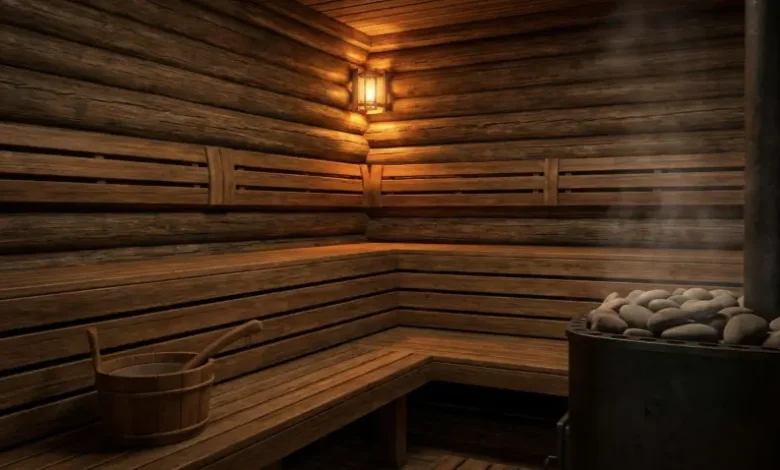
A beginner shopping for a traditional sauna in 2026 is really pricing five separate line items: the heater and stones, the cedar or heat-treated wood build itself, the vapor barrier and insulation work, the electrical circuit, and site prep or foundation work if it is not going into an existing room. Skipping any one of these when comparing quotes is the most common way a beginner ends up surprised by a final bill that looks nothing like the number first advertised for the unit alone.
The Heater and Stones: The Line Item Most Quotes Lead With
Heater cost scales with kilowatts, and kilowatts scale with room volume, roughly 1 kW per 45 to 50 cubic feet of well-insulated space, so a modest two-person room in the 3 kW range costs noticeably less in heater alone than a family-sized room pushing past 8 kW. Stones are a smaller add, usually well under the heater’s own price, but dense volcanic stone sold specifically for sauna use costs more than generic landscaping rock and is worth the difference since it resists cracking under repeated water contact.
The Wood Build: Where Cedar and Treated Alternatives Split in Price
Western red cedar commands a real premium over heat-treated hemlock or aspen, both of which perform similarly once properly kiln-treated for high-heat use, so a beginner on a budget can reasonably choose treated wood for benches and walls without giving up much in durability. What should not get substituted down is the vapor barrier behind the panels, a foil layer that stops the real humidity a traditional sauna generates from migrating into the wall cavity and causing hidden rot, since that line item is cheap relative to the cost of opening a finished wall to fix it later.
Electrical Work: Often the Most Underestimated Line
Most traditional heaters above the smallest sizes need a dedicated 240V circuit, and the cost of that circuit depends heavily on distance from the panel, not on the heater itself. A basement conversion near the service entrance is a small electrical line item; a detached backyard cabin thirty or more feet away can turn wiring into one of the larger costs in the whole project. Getting a firm electrician quote before finalizing a heater choice keeps this line from becoming the budget surprise late in the process.
Site Prep and Foundation: New Build Versus Converted Room
Converting an existing room, like a basement corner or a garage bay, generally costs less on this line than building a freestanding structure from scratch, since the shell, foundation, and roof already exist. A new outbuilding needs a proper pad or foundation, framing, and roofing before the interior work even starts, which is why two traditional sauna projects with the same size heater can land at very different total costs depending on whether they start from an existing shell.
Comparing Total Quotes, Not Just Heater Price
A quote that separates heater cost, wood and vapor barrier materials, electrical, and site prep into distinct lines is easier to compare fairly against a competing quote than one lump number, since two bids with very different totals sometimes reflect different assumptions about scope rather than one simply being a better deal. Reviewing kW options and heater pricing at sweatdecks.com/collections/traditional-sauna alongside separate wood, electrical, and site-prep quotes gives a beginner a clearer sense of where their money is actually going before signing off on any single bid.
What the Research Says About the Payoff
The line items above buy access to a specific kind of heat exposure, and the research on that exposure is worth knowing before committing serious money to it. A large Finnish cohort study published in JAMA Internal Medicine found frequent sauna bathing associated with lower rates of fatal cardiovascular events, and a related analysis in Annals of Medicine found the association held jointly with cardiorespiratory fitness. This is association, not proof that a sauna alone changes outcomes, and a beginner should read it as one factor supporting the purchase, not a guarantee tied to any specific model or heater size.
See also: Business Bookkeeper US: Trusted Financial Solutions for Today’s Businesses
Timeline: What to Expect From Order to First Session
A converted room with straightforward electrical access can sometimes go from order to first session in a matter of weeks, since the shell and foundation work are already done and only the interior build, vapor barrier, and circuit remain. A new freestanding structure realistically takes longer, since it adds foundation work, framing, and roofing ahead of the same interior steps. Beginners planning around a specific date, a holiday gathering or a change of season, should build in extra time for whichever scenario applies, since electrician and contractor scheduling is often the slower variable, not the sauna kit itself.
Questions Worth Asking Before Signing Any Quote
Beyond price, a beginner should confirm what warranty covers the heater versus the wood structure separately, since these sometimes come from different manufacturers even in a single combined quote. Asking whether the vapor barrier and insulation are included as standard or priced as an add-on avoids a surprise change order once work begins. Confirming who pulls the electrical permit, the contractor or the buyer directly, also matters, since an unpermitted circuit can complicate a home sale or insurance claim years down the road even if the work itself was done correctly. A final walkthrough before final payment, checking the vapor barrier seams, bench fit, and door swing against what was promised in the quote, is worth the extra hour it takes rather than discovering a shortcut after the crew has already left.
Frequently Asked Questions
What is the biggest hidden cost when buying a traditional sauna?
Electrical work is the most commonly underestimated line item, since the cost depends on distance from the home’s electrical panel rather than on the heater itself, and a detached outbuilding can turn wiring into one of the largest single costs.
Is heat-treated hemlock a reasonable substitute for cedar?
Yes, for most budgets. Properly kiln-treated hemlock or aspen performs similarly to western red cedar for benches and wall panels once treated specifically for high-heat use, at a noticeably lower material cost.
Does converting an existing room cost less than a new outbuilding?
Generally yes, since the shell, foundation, and roof already exist in a conversion, while a new freestanding structure needs its own foundation and framing before any interior sauna work even begins.
What does the research actually say about traditional sauna use?
Large cohort studies, including one in JAMA Internal Medicine, associate frequent sauna bathing with lower rates of fatal cardiovascular events. This is an association from observational data, not proof that sauna use alone causes the outcome.
References
- Association between sauna bathing and fatal cardiovascular and all-cause mortality events, JAMA Internal Medicine, 2015
- Joint associations of sauna bathing and cardiorespiratory fitness on cardiovascular and all-cause mortality risk, Annals of Medicine, 2018
- Short-term effects of Finnish sauna bathing on blood-based markers of cardiovascular function in non-naive sauna users, Heart and Vessels, 2018
By Owen Bracknell