Lighting is no longer just a finishing touch.
In modern environments, it has become a technology story—one shaped by efficiency, control, and user experience. From offices and retail spaces to hospitality venues and homes, visual environments are increasingly influenced by how intelligently light is designed and deployed. What was once purely decorative now sits at the intersection of design, engineering, and everyday functionality.
This shift is especially visible in the rise of custom LED signs. Far from being simple aesthetic features, LED signs now reflect a smarter approach to visual design—one enabled by modern lighting technology that prioritises precision, longevity, and adaptability. As LED systems have matured, signage has evolved into a flexible design tool that responds to both creative intent and practical demands.
How LED Technology Changed the Rules of Visual Design
Before LEDs became mainstream, visual signage relied on neon tubes or incandescent lighting. These solutions had limitations: high energy consumption, shorter lifespans, heat output, and limited control. LED technology fundamentally changed that equation.
Modern LEDs offer significantly greater efficiency and durability, alongside consistent brightness and colour accuracy. More importantly, they allow for precise control. Light can now be shaped, scaled, and adapted with far greater flexibility than before. This opened the door to visual design that is not only more sustainable, but also more intentional and responsive to context.
As a result, lighting shifted from being a static element to an active design component.
What Makes Custom LED Signs a Smarter Design Choice
“Smart” doesn’t always mean complex. In the context of LED signage, it often means adaptable, direct, and effective. A custom LED sign has a singular focus — it’s designed for movement, brand reinforcement, or ambiance.
Sustainability is a factor, as well. LEDs require less power for a consistent output — making them appropriate for long-term, commercial and personal use, where durability means less regular maintenance. But they’re also versatile and can be cut into a variety of shapes, installed in an array of locations of specific specifications, allowing for flexibility of the final image.
Taken together, it’s easy to see why LED signage is a wise choice. It works in offices and retail, in hospitality, and — increasingly — in the home.
The Role of Software, Materials, and Engineering
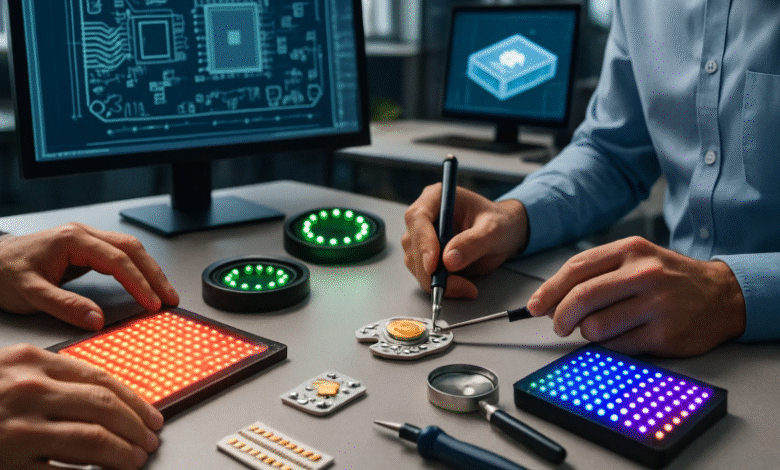
Behind every great LED sign is a series of thoughtfully planned and designed components. The light source is one thing, but modern LED signage tends to also use a driver (to regulate power), a control system (to adjust light output), and light diffusing material (to create an even wash of light).
The manufacturing process matters, too. The sign must be durable, and housings must be solid; finishes should be refined, and LED signs should function at their peak with consistent quality and no visual decay. Each of these components is working in unison to create a sense of permanence — to make sure that the sign feels designed and considered, instead of cheap and throwaway.
This multi-faceted approach points towards the fact that LED signage is — as much as an engineering object — a designed object.
Where Design Thinking Meets Everyday Technology
As we increasingly move to digital-first spaces, visual design is becoming more closely aligned with principles of user experience design. Clarity, balance, and emotional response are just as important as the luminance or hue of light. After all, lighting affects how we move through a space, what captures our focus, and how we interpret our surroundings.
LED signage is a natural addition to this trend. With the right approach, these systems can influence human behavior, increase comfort, and help build a brand or sense of place without becoming an overwhelming presence for viewers. Instead of distracting, it partners with the designed environment.
Brands such as Yellowpop are great examples of how design thinking and craftsmanship translate to LED signage — repackaging the technology in a way that offers visually logical, human-centered results.
See also: How to Avoid Overpriced Repairs: A Sydney Technician’s Insider Advice
Smarter Visual Design as a Long-Term Shift
The increase in LED message display usage is indicative of a broader trend in the way we design visual environments. No longer is lighting just a layer that gets tacked on at the end; now it is foundational to the rest of what we craft for our environments. Now, it takes intention to execute well.
As technology itself influences how we experience and design space, LED signage is a clear example of a new era in visual design — one that is smarter, more energy-efficient, more adaptable, and more thoughtfully engineered to work with our contemporary way of life.