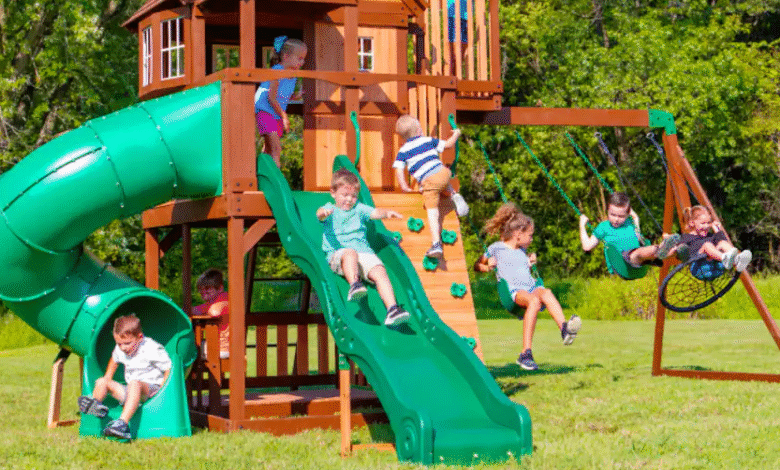
Slides are basically the gateway drug to playground fun—every kid gravitates toward them first. But discover playground slides today and you’ll find they’ve evolved way beyond the straight metal chutes that scorched your legs on summer days as a kid. Modern slides incorporate safety features, varied designs, and materials that balance fun with injury prevention. The physics of slides—velocity, friction, angle of descent—directly impacts both enjoyment and safety, which is why playground designers now obsess over details like slide bed curvature, exit velocity, and landing zone requirements. Choosing the right slide involves understanding age-appropriateness, space requirements, and how different slide types encourage different play patterns. Whether you’re planning a backyard playground or evaluating public play spaces, knowing what makes slides both thrilling and safe helps you make smarter decisions about equipment that’ll see heavy use for years.
Understanding Slide Height and Age Appropriateness
Slide height determines excitement level but also injury risk. The higher the slide, the faster kids go, and the harder they might fall if something goes wrong. Industry standards recommend maximum slide heights of 4 feet for toddlers aged 2-5, and up to 8 feet for kids aged 5-12. Going higher than these recommendations without proper safety features increases impact force in falls.
The relationship between height and velocity isn’t linear—it’s exponential. A slide twice as high doesn’t make kids go twice as fast, it makes them go about 1.4 times faster. But the impact force if they fall from that height increases significantly. This math matters when you’re choosing slides for mixed-age playgrounds where younger kids might attempt equipment designed for older children.
Exit velocity at the bottom also increases with height. Slides need adequate run-out zones—flat areas at the bottom where kids can safely slow down before encountering obstacles. Taller slides require longer run-out zones, typically 6 feet minimum for slides over 6 feet tall.
Material Choices and Temperature Considerations
Metal slides are classics but they absorb heat like crazy. On sunny days, metal surfaces can reach 150-160 degrees Fahrenheit—hot enough to cause burns within seconds. Most modern playgrounds opt for plastic or composite materials that stay significantly cooler. Rotomolded plastic slides typically max out around 110-120 degrees even in direct sun, which is warm but not dangerous.
Stainless steel slides offer a middle ground. They heat up less than painted metal and have smoother surfaces than plastic, but they’re pricier. Some high-end playgrounds use stainless steel specifically because the slickness creates faster, more exciting rides that kids love.
Plastic slides vary in quality dramatically. Cheaper plastics become brittle with UV exposure and crack after a few years. Better quality rotomolded polyethylene slides include UV stabilizers that prevent degradation. These last 10-15 years even with constant sun exposure. Check warranty periods—reputable manufacturers stand behind their materials with 5-10 year warranties.
Design Variations That Change Play Experiences
Straight slides are the baseline, but curved and spiral slides add excitement without increasing height. The curves slow descent slightly through centrifugal force, which can make shorter slides feel more thrilling. Spiral slides also take up less ground space relative to their descent length—a 6-foot spiral slide might only need an 8×8 foot footprint versus a straight slide needing 6×12 feet.
Wave slides incorporate humps and dips that create a roller coaster effect. Kids either love these or find them too jarring—there’s not much middle ground. The wave design requires more structural support and costs more, but it differentiates a playground and attracts kids who’ve aged out of interest in standard slides.
Tube slides enclose riders completely or partially, creating a tunnel effect kids find thrilling. The enclosure also prevents sideways falls during descent, making them safer in some ways. However, supervision is harder since you can’t see riders once they enter the tube. Some tube slides incorporate clear sections so adults can monitor rider progression.
See also: City Life, Cozy Corner: How a Sofa Turned My Capital Apartment Into a Home
Safety Features That Matter Most
Slide sides should extend at least 4 inches above the slide bed for young children (under 5) and 2-3 inches for older kids. These guards prevent riders from rolling off sideways—a common cause of playground injuries. The guards need to run the entire length of the slide, not just the top section.
Entry platforms require proper guardrails and enclosed openings that prevent falls while kids wait their turn. The platform should have enough space for multiple children to stand safely—at least 18-24 inches deep beyond the slide entrance. Platforms without adequate railings or space create pushing hazards as kids jostle for position.
The slide bed should be smooth without seams, rivets, or rough edges that could catch clothing or skin. Run your hand along the entire slide surface—if you feel anything that could snag fabric, it’s a hazard. Proper installation eliminates gaps between slide sections that could trap fingers or catch clothing.
Installation and Placement Considerations
Slides need proper landing zones free of obstacles. Nothing—no other equipment, trees, fencing, or hard surfaces—should be within 6 feet of the slide exit. The landing area requires impact-absorbing surfacing like engineered wood fiber, rubber mulch, or poured rubber. Grass and dirt don’t provide adequate impact attenuation for falls from slides over 18 inches high.
Orientation matters for temperature management. Slides facing north in the northern hemisphere receive less direct sun and stay cooler. If space constraints force south-facing placement, consider shade structures or positioning slides under tree canopy. Just ensure trees won’t drop branches onto the equipment.
Ground anchoring prevents tip-over incidents. Slides need concrete footings or ground anchors rated for the equipment weight and expected use intensity. Freestanding slides without proper anchoring can tip if multiple kids climb the back or if high winds hit the structure.